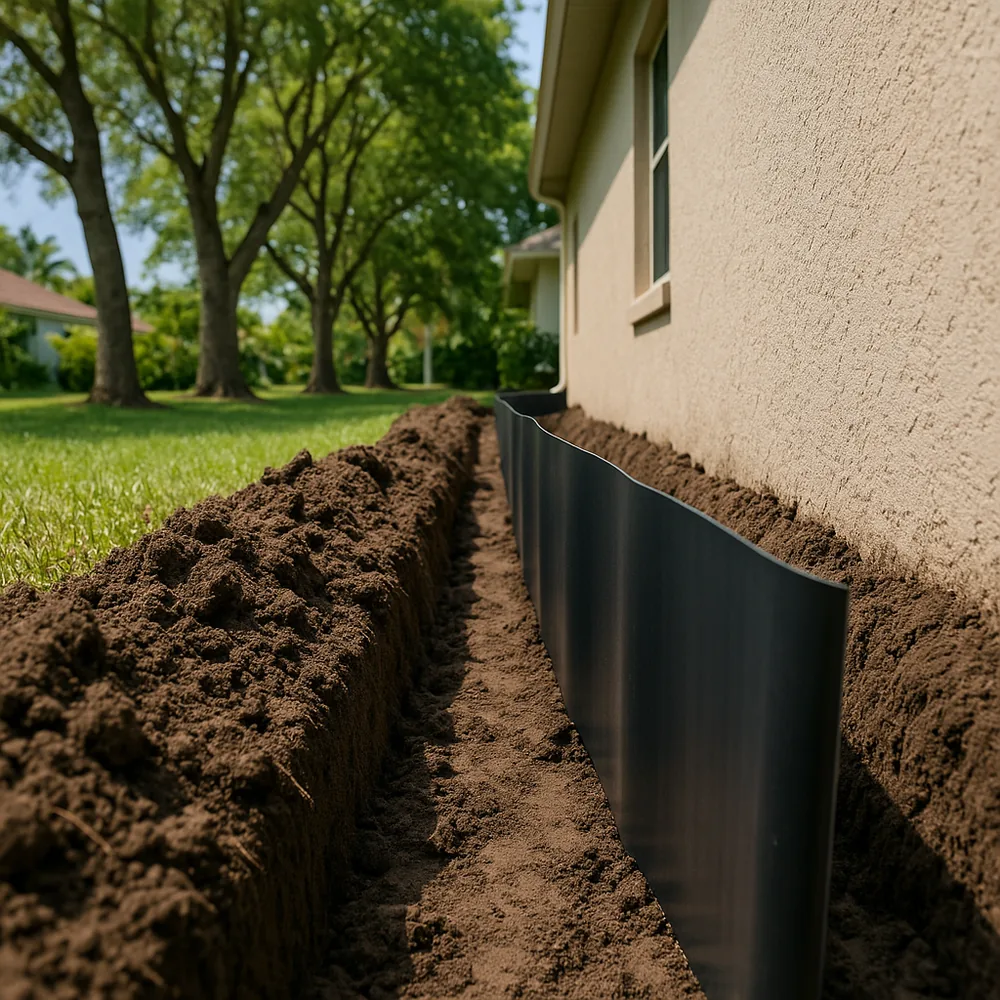
Protect your property's infrastructure from invasive tree roots while maintaining the beauty of your South Florida landscape with strategic root barrier solutions.
Understanding Root Barriers And How They Protect Your South Florida Property
Root barriers are specialized underground dividers installed between trees and critical infrastructure to redirect root growth away from vulnerable areas. In South Florida's unique environment—where Coral Gables, Pinecrest, and Palmetto Bay properties feature lush tropical landscapes alongside sidewalks, driveways, foundations, and underground utilities—root barriers serve as an essential preventive tool for property protection. These physical barriers are typically made from durable materials like high-density polyethylene (HDPE) or polypropylene, designed to withstand our region's humid subtropical climate and resist degradation from moisture and soil contact.
The mechanism is straightforward yet highly effective: when tree roots encounter a properly installed root barrier, they're deflected downward or redirected along the barrier's length, preventing them from invading spaces where they could cause costly damage. This is particularly important in our South Florida communities, where mature tropical trees like ficus, live oaks, and royal palms are prized for their beauty and shade but can develop aggressive root systems that threaten hardscapes and structures. Root barriers allow you to maintain the environmental benefits and aesthetic appeal of mature trees while safeguarding your property investment.
For homeowners and property managers in Coral Gables, Pinecrest, and Palmetto Bay, understanding root barriers means recognizing them as a proactive landscape management strategy. Rather than waiting for roots to buckle your driveway or infiltrate your foundation, root barriers installed during landscape design or alongside existing mature trees provide long-term protection. When combined with proper tree selection, placement, and ongoing care from ISA-certified arborists, root barriers become part of a comprehensive approach to sustainable, low-maintenance landscapes that balance beauty with functionality.
Key Benefits Of Installing Root Barriers In Coral Gables, Pinecrest, And Palmetto Bay
The primary benefit of root barriers is infrastructure protection. In our South Florida communities, where property values are closely tied to curb appeal and structural integrity, preventing root damage to driveways, sidewalks, patios, and foundations can save thousands of dollars in repair costs. Root barriers create a predictable zone of control, allowing you to plant desirable shade trees and tropical specimens closer to hardscapes than would otherwise be prudent. This is especially valuable in Pinecrest and Coral Gables, where tree canopy ordinances and community aesthetics emphasize mature tree coverage, yet properties must also maintain safe, level walkways and undamaged infrastructure.
Root barriers also protect underground utilities—a critical consideration given the complexity of water lines, sewer systems, irrigation networks, and electrical conduits beneath South Florida properties. Invasive roots seeking moisture can infiltrate sewer lines and irrigation systems, causing blockages, leaks, and expensive emergency repairs. By installing root barriers between trees and utility corridors during landscape installation or renovation projects, property managers and homeowners in Palmetto Bay and surrounding areas can prevent service disruptions and extend the lifespan of underground infrastructure. This proactive approach aligns perfectly with water-efficient irrigation system investments, protecting smart irrigation components from root intrusion.
Beyond damage prevention, root barriers support healthier tree growth and landscape sustainability. When roots are guided away from compacted hardscape areas and directed into deeper, more nutrient-rich soil zones, trees often develop stronger, more stable root systems. This reduces surface roots that can create tripping hazards and lawn maintenance challenges while encouraging deeper anchoring that improves wind resistance—an important factor during South Florida's hurricane season. For property owners committed to sustainable, low-maintenance landscapes, root barriers contribute to long-term tree health and reduce the need for frequent root pruning or premature tree removal, preserving the environmental and aesthetic benefits that mature trees provide to your property and community.
Common Limitations And Considerations When Using Root Barriers
While root barriers offer significant benefits, it's important to understand their limitations to set realistic expectations. Root barriers are not impenetrable walls—they redirect root growth rather than eliminate it entirely. If a barrier is too short, improperly installed, or doesn't extend deep enough into the soil, aggressive roots may grow beneath, around, or over the barrier. In South Florida's sandy and limestone-based soils common in Coral Gables, Pinecrest, and Palmetto Bay, roots can exploit gaps or weaknesses in barrier installation. This is why professional installation by experienced landscape specialists who understand local soil conditions is essential for root barrier effectiveness.
Another consideration is that root barriers must be appropriately sized and positioned based on the specific tree species, mature size, and growth patterns. Tropical and subtropical trees common to our area—such as ficus, bamboo, certain palm species, and banyan trees—have particularly vigorous root systems that may require deeper or longer barriers than temperate species. Additionally, root barriers can sometimes concentrate root growth in limited areas, potentially creating instability if the tree's root zone becomes too restricted. An ISA-certified arborist can assess whether root barriers are suitable for your specific tree species and site conditions, or whether alternative strategies like different tree selection or placement would better serve your property's needs.
Cost and maintenance are practical limitations to consider as well. While root barriers are a long-term investment that can prevent expensive repairs, the upfront installation cost—especially for retrofitting barriers around existing mature trees—can be significant. Excavation near tree root zones must be done carefully to avoid damaging the tree's structural roots, and in some cases, the installation process itself can stress the tree. Property managers working within budget constraints should weigh the cost of barrier installation against the probability and expense of potential root damage. Regular landscape inspections and monitoring by professional maintenance teams can help detect any barrier failure or root breakthrough early, ensuring your investment continues to provide protection over time.
Choosing The Right Root Barrier Materials And Installation Methods For Your Landscape
Selecting appropriate root barrier materials is critical for long-term performance in South Florida's climate. High-density polyethylene (HDPE) barriers are among the most popular choices due to their durability, flexibility, and resistance to degradation from moisture, UV exposure, and soil chemicals. HDPE barriers typically range from 40 to 80 mils in thickness, with heavier gauges providing greater longevity and resistance to root penetration. For properties in Coral Gables, Pinecrest, and Palmetto Bay with aggressive tree species or particularly valuable infrastructure, thicker barriers installed to depths of 24 to 36 inches offer the best protection. Some premium barriers feature textured surfaces that encourage roots to grow downward rather than along the barrier face, further enhancing effectiveness.
Proper installation is just as important as material selection. Root barriers should be installed in a continuous trench between the tree and the protected area, with panels overlapping or sealed to prevent root intrusion through gaps. The top edge of the barrier should remain slightly above ground level—typically one to two inches—to prevent roots from growing over the barrier. The depth and length of the barrier depend on the tree species, mature size, and proximity to infrastructure: smaller ornamental trees may require barriers 18 to 24 inches deep and 10 to 15 feet long, while large shade trees or species with aggressive lateral roots may need barriers 30 to 36 inches deep extending 20 feet or more. Professional landscape design and installation teams experienced with South Florida conditions can determine the optimal barrier specifications for your specific site.
Timing and technique matter significantly when retrofitting root barriers around existing trees. Excavation should be done during the tree's dormant period when possible, though South Florida's year-round growing season means careful technique is always essential. Hand digging or hydro-excavation near the tree minimizes root damage compared to mechanical trenching. Any roots severed during installation should be cleanly cut with sharp tools to promote healing. After barrier installation, backfilling with quality soil and ensuring proper irrigation helps the tree recover from installation stress. For new landscape installations, incorporating root barriers into the initial design—positioning them during tree planting—is far less disruptive and more cost-effective. Working with a full-service landscape provider that offers design, installation, and ongoing maintenance ensures your root barrier system integrates seamlessly with your overall property landscape strategy.
When To Consult An ISA-Certified Arborist About Root Management Solutions
Consulting an ISA-certified arborist is essential when planning root barrier installations, especially for existing mature trees or properties with complex landscape challenges. Arborists bring specialized knowledge of tree biology, root architecture, and species-specific growth patterns that determines whether root barriers are appropriate and how they should be implemented. Before installing barriers in Coral Gables, Pinecrest, or Palmetto Bay properties, an arborist can conduct a thorough tree and site assessment, evaluating the tree's health, structural stability, and root zone characteristics. This professional evaluation helps prevent installation mistakes that could harm valuable trees or fail to provide adequate protection for your infrastructure.
An arborist consultation is particularly important when you're experiencing active root problems—such as pavement heaving, foundation concerns, or utility line intrusion. In these situations, root barriers may be part of a comprehensive solution that includes strategic root pruning, tree risk assessment, and potentially tree removal if the specimen poses ongoing hazards. ISA-certified arborists can provide detailed arborist reports documenting tree condition, root management recommendations, and compliance with local tree preservation ordinances that are common in our South Florida municipalities. These reports are often required for permitting when significant tree work or landscape modifications are planned, and they provide property managers and homeowners with documentation supporting informed decisions about tree retention versus removal.
Beyond root barrier decisions, ongoing relationships with certified arborists support long-term tree health and risk mitigation. Regular tree health assessments, proper pruning practices, and monitoring of previously installed root barriers ensure that your landscape investment continues to provide value while protecting your property. For property managers overseeing multiple sites or homeowners with extensive tropical landscapes, partnering with a full-service tree and landscape company that employs ISA-certified arborists provides seamless integration of root management with overall landscape design, installation, and maintenance services. This comprehensive approach—combining expert tree care with smart irrigation, sustainable planting design, and proactive infrastructure protection—creates beautiful, lasting outdoor spaces that enhance property value while minimizing long-term maintenance costs and risks. If you're considering root barriers or facing tree-related infrastructure concerns, scheduling a free consultation with an experienced arborist is the best first step toward effective, sustainable solutions tailored to your South Florida property.